
Bridging the Distance: Pioneering Virtual Mission Trips with Meta Glasses
In a rapidly changing global landscape, the distance between medical mission trips shouldn't mean a gap in critical healthcare support. When life-saving medical equipment fails or a facility faces infrastructure hurdles, international hospitals cannot always wait months for the next team of volunteers to arrive on-site.
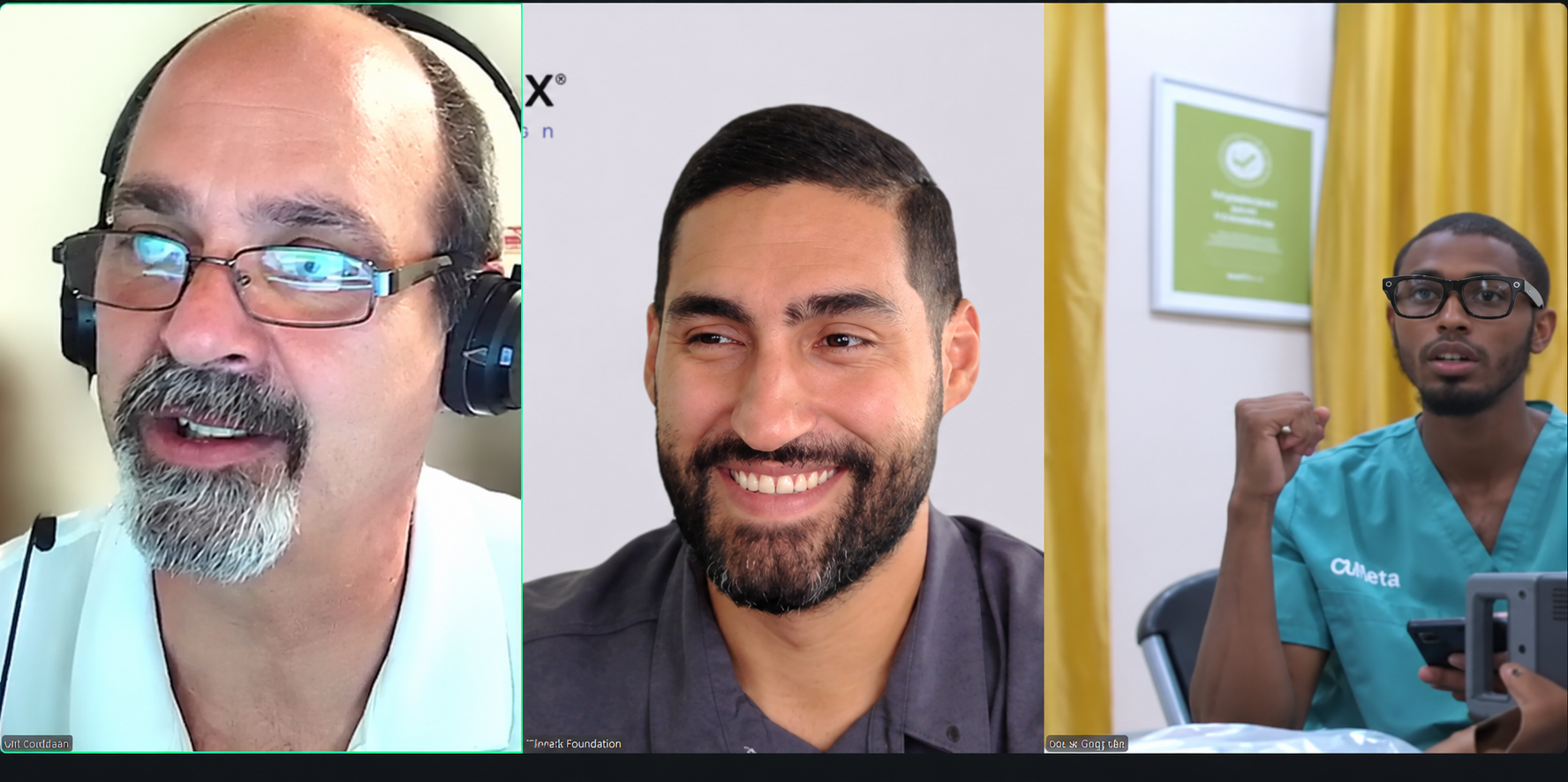
To address this challenge, the Trimedx Foundation has launched an innovative pilot program utilizing Meta smart glasses, bringing real-time, "field-of-view" clinical engineering and facilities support directly to our global partners. By empowering international healthcare technicians with wearable technology, we are testing the ability to offer continuous, expert guidance utilizing the latest technologies.
The Backstory: Filling the Gaps Between Trips
For years, the Trimedx Foundation has been sending skilled volunteers overseas to provide hands-on equipment training and build local capacity. However, our teams recognized a recurring vulnerability: a significant amount of time passes between physical visits. If a local technician runs into a complex issue after the US team departs, they are often left to troubleshoot alone.
To bridge this gap, our team began diversifying remote support offerings. We have launched monthly virtual training sessions with our international partners and developed a specialized Technician Portal, serving as a centralized hub, capturing training materials, session recordings, and resources available to all partner sites.
The introduction of Meta glasses is the latest—and most interactive—evolution of this remote support strategy, designed to provide another possible method of support without requiring travel.
Inside the 2026 Meta Glasses Pilot
To launch the initiative, the Foundation's board approved a specialized technology acquisition to fund the logistics for the pilot program. The concept itself is simple, a pair of Mega glasses is shipped to an international site, and utilized by a technician there, linked via video with a Trimedx Foundation volunteer in the United States.
This year, the pilot program made its debut in Niger and Uganda, focusing on two distinct areas of hospital operations:
- Biomedical Engineering (Biomed): US-based trainers were able to see exactly what the local student technicians were seeing in real time, allowing them to provide step-by-step guidance and assistance through medical equipment repairs.
- Facilities Management: In Niger, Trimedx Foundation volunteer Kathy Neal utilized the glasses to conduct a comprehensive Environment of Care safety assessment. This virtual walkthrough focused on building efficiencies, sidewalk safety, and infrastructure preparation for regulatory compliance under SafeCare. Kathy adds, “This was our first virtual visit and I learned a lot. I believe the building tour portion went well. I was able to see the areas and equipment that I wanted to see for compliance purposes using the Meta glasses.”
Lessons Learned and Overcoming Hurdles
As with any pioneering technology pilot, the rollout provided invaluable insights into the realities of working in developing regions.
The primary hurdle identified during the pilot was internet stability. Walking through large hospital complexes caused occasional connectivity dropouts as technicians drifted too far from localized routers. One key takeaway was that the system works most effectively when the technician remains stationary in a single room to maintain a solid connection.
Looking forward, the Foundation acknowledges that reliable internet is a critical requirement in supporting virtual programs. While the pilot targeted Niger and Uganda specifically because they possess the most reliable connections, we are exploring broader solutions to help future partner sites improve their baseline connectivity infrastructure.
A Vision for the Future
The response from the field has been nothing short of spectacular. The local technicians were incredibly excited to pioneer this wearable technology, and the immediate impact has generated a massive buzz across our network as additional partner sites have expressed an interest in testing the technology.
Ultimately, these virtual tools are about resilience. Whether facing geographic distances, geopolitical unrest, or health outbreaks that restrict physical travel, the Trimedx Foundation is now better prepared than ever to stand by our global healthcare partners—ensuring they always have the support they need to provide safe, reliable care.